Introduction: Why Soccer Golf Is the Fastest-Growing Hybrid Sport
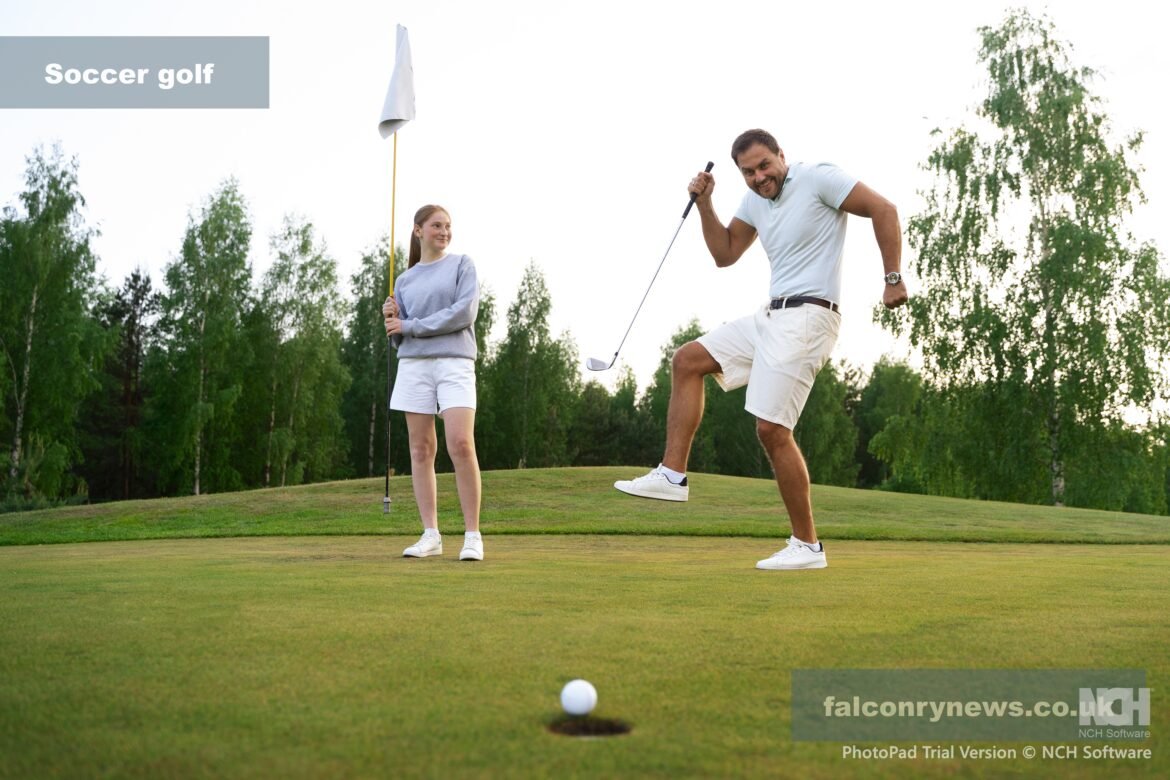
Imagine combining the precision of golf with the energy and fun of soccer. That’s soccer golf, also known as FootGolf—a thrilling hybrid sport played on golf courses using a regulation soccer ball instead of clubs. Players kick the ball into oversized holes, aiming for the lowest number of strokes.
Over the past decade, the sport has exploded in popularity across the U.S., Europe, Asia, and South America. Families, athletes, and even corporate teams are embracing soccer golf for its low learning curve, affordability, accessibility, and unique outdoor experience.
Whether you’re a complete beginner, a soccer fan, a golfer curious about new challenges, or a recreational athlete looking for something fresh, this guide walks you through everything you need to know.
What Is Soccer Golf? (FootGolf Explained)
Soccer golf is a hybrid outdoor sport that blends:
- Golf rules and scoring
- Soccer kicking techniques
- Strategy and precision
Players navigate an 9-hole or 18-hole FootGolf course, kicking a size-5 soccer ball into 21-inch cups. Unlike golf, there are no clubs, no expensive gear, and very little barrier to entry.
Why Soccer Golf Is Becoming So Popular
Several factors have turned FootGolf into one of the fastest-growing recreational sports:
1. Low Cost & Minimal Equipment
You only need:
- A soccer ball
- Turf or athletic shoes
- Comfortable clothing
Compared to traditional golf, FootGolf is much more affordable.
2. Easy to Learn (Great for Beginners)
Even players with no soccer or golf experience can pick up the basics in minutes.
3. Fun for All Ages
Kids, adults, seniors, and mixed-skill groups enjoy the game together.
4. Great for Fitness
A full 18-hole FootGolf round can require walking 3–4 miles, helping players burn calories while having fun.
5. Family-Friendly & Social
The sport encourages teamwork, laughter, and friendly competition—making it ideal for:
- Family outings
- Birthday parties
- Corporate team-building
- Youth sports groups
How to Play Soccer Golf: Rules, Setup & Scoring
Soccer golf follows similar rules to golf, but with simplified gameplay.
1. The Objective
Kick the ball into the cup in as few strokes (kicks) as possible.
2. The Equipment You Need
You don’t need expensive gear. Most beginners only bring:
- Soccer Ball (Size 5)
- Official FootGolf size.
- Turf Shoes or Indoor Soccer Shoes
- Metal spikes are banned because they damage the course.
- Athletic Clothing
- Water Bottle & Sunscreen
Some courses rent soccer balls if you forget yours.
3. Scoring System
FootGolf uses standard golf scoring terms:
- Par – Expected kicks needed for each hole
- Birdie – 1 under par
- Eagle – 2 under par
- Bogey – 1 over par
- Double Bogey – 2 over par
Players take turns completing each hole and record their scores on a FootGolf scorecard.
4. Tee-Off Rules
Players kick from the tee box, an area marked on the course.
Key rules:
- The ball must remain stationary before you kick.
- You cannot roll or move the ball by hand once in play.
- The farthest ball from the hole kicks next.
5. In-Play Rules
Your ball stays in play until it reaches the hole. Other common rules include:
- Do not damage the turf—no hard toe-poking or digging.
- Obstacles (trees, bunkers, water) must be played as they lie, just like golf.
- Hazards have penalty strokes.
6. Penalty Rules
Typical penalties include:
- 1-stroke penalty for water hazards
- Re-teeing if the ball goes out of bounds
- Obstructions may allow relief, depending on the course
Courses usually provide a printed rules sheet.
Soccer Golf Course Layout: What to Expect
A FootGolf course often shares space with an existing golf course, but with modifications.
Courses typically include:
1. 21-inch Diameter Cups
Large holes to fit soccer balls.
2. Par 3, Par 4, and Par 5 Holes
Just like golf.
3. Fairways & Rough
Different surfaces add difficulty.
4. Bunkers and Slopes
Natural obstacles create strategy.
5. Flags & Markers
Each hole has a visible FootGolf flag.
Strategies to Improve Your Soccer Golf Game
To build authority and provide real value, here are practical techniques used by experienced players.
1. Master Your Kicking Techniques
Mix different soccer kicks depending on the situation:
- Instep Kick (Power shot) – for long-distance drives
- Side-Foot Pass (Accuracy shot) – for mid-range
- Chip Kick – for clearing obstacles
- Curve Kick – advanced technique
2. Control the Ball, Don’t Just Kick Hard
Beginners often kick too hard and overshoot the fairway.
Seasoned players focus on precision and ball placement.
3. Study the Course Before You Play
Notice:
- Slopes
- Tree placement
- Wind
- Water hazards
Course awareness helps lower your score dramatically.
4. Choose the Right Footwear
Turf shoes give:
- Better traction
- Better ball control
- Less strain on the feet
Avoid running shoes—they reduce accuracy.
5. Practice Short-Game Control
Think of putting in golf. Short kicks around the cup require finesse.
Benefits of Playing Soccer Golf
Adding authoritative info strengthens E-E-A-T.
Physical Benefits
A round of soccer golf burns an average of:
- 250–450 calories per hour (depends on pace)
It improves:
- Cardiovascular health
- Balance
- Coordination
- Leg strength
Mental & Social Benefits
Soccer golf helps improve:
- Strategic thinking
- Patience
- Focus
The social aspect promotes team bonding and stress relief.
Economic Benefits for Golf Courses
Many golf courses add FootGolf to attract:
- Younger players
- Families
- Non-golf audiences
This boosts revenue using the same land.
Where to Play Soccer Golf: Finding a Course Near You
FootGolf clubs and courses are now available in:
- The United States
- Canada
- United Kingdom
- Germany
- Spain
- Netherlands
- Australia
- Japan
Many national FootGolf associations provide online directories.
Soccer Golf Tournaments & Leagues
If you want to go competitive, many countries run leagues through:
- United States FootGolf Association (USFGA)
- Federation for International FootGolf (FIFG)
- European FootGolf Tour
These organizations host:
- Amateur events
- Professional FootGolf championships
- International cups
How to Start a Soccer Golf Club or League
If you’re an organization, school, or recreation center, consider launching a club.
Steps:
- Partner with a golf course.
- Establish membership fees.
- Set weekly tee times.
- Host monthly tournaments.
- Create social media pages to build a community.
This is a great opportunity for community leaders and coaches.
Cost of Playing Soccer Golf
Pricing varies by region, but generally:
- $10–$25 per round on weekdays
- $15–$35 per round on weekends
- $3–$8 ball rental if needed
Cheaper than traditional golf or many indoor sports.
Tips for Beginners to Avoid Common Mistakes
New players often struggle with:
❌ Overshooting the hole
Solution: Take shorter, controlled shots near the green.
❌ Wrong footwear
Solution: Wear turf or soccer shoes.
❌ Ignoring the wind
Solution: Adjust kick direction accordingly.
❌ Trying to kick around obstacles unrealistically
Solution: Chip over or play safe.
Safety Tips
To minimize risks:
- Warm up your legs before kicking.
- Stay aware of nearby golf players.
- Avoid running downhill too fast.
- Use sunscreen and stay hydrated.
Future of Soccer Golf: Growing Trends
Soccer golf is expanding quickly because of:
- Social media sports influencers
- Family-friendly outdoor activities post-2020
- Hybrid sports gaining mainstream attention
- Esports crossovers and VR simulations
- Schools adopting FootGolf in physical education
Many experts expect FootGolf to grow into a major global recreational sport within the next decade.
Conclusion:
Soccer golf is a fun, affordable, beginner-friendly sport that blends strategy, fitness, and pure enjoyment. Whether you’re a weekend athlete, a soccer enthusiast, or someone simply looking for a new outdoor activity, FootGolf offers something for everyone.
FAQs About Soccer Golf (People Also Ask)
1. What is soccer golf?
Soccer golf—or FootGolf—is a sport combining soccer kicking with golf rules. Players kick a soccer ball into oversized holes with the goal of using the fewest strokes.
2. Is soccer golf easy to learn?
Yes. It’s very beginner-friendly. Even players with no soccer or golf experience can learn in just a few minutes.
3. What equipment do you need for FootGolf?
Only a size-5 soccer ball, turf shoes, and comfortable athletic clothing. Some courses provide ball rentals.
4. How long is a typical FootGolf course?
A standard 18-hole course takes 90–120 minutes to complete, depending on group size and pace.
5. Can kids play soccer golf?
Absolutely. The sport is popular among families, youth leagues, and school sports programs.
6. How much does it cost to play?
Most courses cost $10–$35 per round, depending on the region and day.
7. Where can I find a soccer golf course near me?
Check national FootGolf associations or search “FootGolf course near me” for local listings.