Introduction: The Battle of the Classics
When it comes to classic whiskey cocktails, two names dominate every bar menu: the Manhattan and the Old Fashioned. Both are timeless whiskey-based drinks that showcase the spirit’s versatility and complexity.
These cocktails have rich histories and distinct personalities—one sophisticated and smooth, the other bold and straightforward. Whether you’re new to home bartending or a seasoned cocktail enthusiast, understanding the Manhattan vs Old Fashioned debate will help you appreciate both drinks on a deeper level.
The Origins — Where It All Began
The Old Fashioned: America’s First Cocktail
The Old Fashioned is often hailed as America’s original cocktail, dating back to the early 1800s. It embodies simplicity—just bourbon or rye whiskey, a sugar cube, bitters, and water. The name “Old Fashioned” came from patrons asking for a drink made “the old-fashioned way.”
- Invented: Early 19th century (circa 1806)
- Base spirit: Bourbon or rye whiskey
- Signature style: Minimalist and spirit-forward
This iconic drink captures the essence of bourbon culture—rich, smoky, slightly sweet, and perfect for sipping slowly over a large ice cube.
The Manhattan: A Toast to Sophistication
The Manhattan cocktail emerged later, around the 1880s, reportedly at the Manhattan Club in New York City. Unlike the Old Fashioned, it introduced sweet vermouth—a bold move that added depth and smoothness to whiskey.
- Invented: Circa 1880s
- Base spirit: Rye whiskey (or bourbon)
- Signature style: Elegant, aromatic, and balanced
The Manhattan became the drink of choice for refined palates and urban socialites—its complex flavor profile representing the heart of sophisticated cocktail culture.
The Ingredient Showdown
| Element | Old Fashioned | Manhattan |
|---|---|---|
| Base Spirit | Bourbon or rye whiskey | Rye whiskey or bourbon |
| Sweetener | Sugar cube or simple syrup | Sweet vermouth |
| Bitters | Angostura bitters | Angostura or orange bitters |
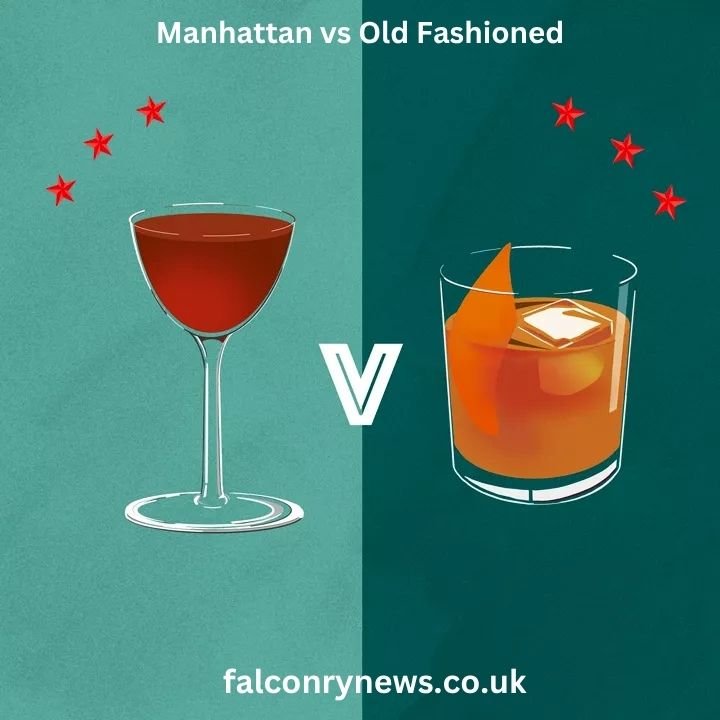
| Garnish | Orange peel and cherry | Brandied cherry |
| Glassware | Rocks glass | Coupe or martini glass |
Flavor Profile Comparison
- Old Fashioned: Rich, spirit-forward, with caramel, vanilla, and citrus notes.
- Manhattan: Smooth, herbaceous, and slightly sweet from the vermouth.
Both cocktails highlight the beauty of bitters and vermouth in balancing whiskey’s intensity with subtle sweetness.
The Alcohol Balance
According to modern mixology experts, a Manhattan’s ABV averages around 30–35%, while an Old Fashioned sits closer to 35–40%. The latter is stronger and more whiskey-dominant, perfect for those who enjoy a pure, undiluted spirit experience.
Which One Is Right for You?
Choose the Old Fashioned If You:
- Prefer bold, whiskey-forward flavors.
- Enjoy a hint of sweetness and citrus from the orange peel.
- Like sipping slowly on a chilled rocks glass.
- Appreciate classic simplicity in your drink recipes.
Choose the Manhattan If You:
- Prefer smooth, balanced cocktails with an aromatic edge.
- Enjoy sweet vermouth’s herbal and complex undertones.
- Like a drink that feels refined and best served “up.”
- Want a cocktail that embodies New York sophistication.
Expert Mixology Tips
Old Fashioned Tips
- Use a large ice cube to slow dilution.
- Try different bitters like chocolate or orange bitters for variety.
- Express the orange peel oils over the glass for aroma and presentation.
Manhattan Tips
- Stir, don’t shake, to maintain texture and clarity.
- Chill your glassware before serving for a smooth finish.
- Experiment with premium vermouths like Carpano Antica or Dolin Rouge.
Fun Fact: Popularity in Modern Cocktail Culture
According to a 2024 Drizly cocktail trends report, the Old Fashioned remains the most ordered whiskey cocktail in the U.S., while the Manhattan consistently ranks in the top five. This shows that both drinks remain staples in craft cocktail bars and home mixology setups alike.
Variations Worth Trying
Old Fashioned Variants
- Smoked Old Fashioned: Infused with wood smoke for a campfire aroma.
- Rum Old Fashioned: Tropical and sweet twist using dark rum.
- Espresso Old Fashioned: A bold, caffeinated take for modern drinkers.
Manhattan Variants
- Perfect Manhattan: Equal parts sweet and dry vermouth for balance.
- Black Manhattan: Substitutes Averna amaro for vermouth, adding depth.
- Rob Roy: A Scotch-based Manhattan variation with smoky complexity.
Manhattan vs Old Fashioned — The Verdict
If you crave a spirit-forward, strong, and traditional experience, the Old Fashioned wins your heart.
If you love a smooth, well-balanced, and aromatic cocktail, the Manhattan is your match.
Both belong in any home bartender’s repertoire—two sides of the same whiskey coin.
FAQs About Manhattan vs Old Fashioned
Q1. Is a Manhattan sweeter than an Old Fashioned?
Yes. The sweet vermouth in a Manhattan adds more sweetness and herbal notes compared to the sugar cube in an Old Fashioned.
Q2. Which cocktail has more alcohol content?
The Old Fashioned typically has a higher alcohol by volume (ABV), making it stronger and more whiskey-dominant.
Q3. Can you use bourbon in a Manhattan?
Absolutely. While rye whiskey is traditional, bourbon gives the Manhattan a smoother, sweeter profile.
Q4. Which drink is better for beginners?
The Old Fashioned is easier to mix and a great starting point for those new to classic cocktail recipes.
Q5. What’s the difference between dry and sweet vermouth in a Manhattan?
Dry vermouth results in a Dry Manhattan—less sweet and more bitter—while sweet vermouth gives the classic, balanced flavor.
Conclusion: Sip Smarter, Drink Better
Whether you choose the smoky simplicity of an Old Fashioned or the refined smoothness of a Manhattan, both cocktails embody timeless craftsmanship. Each sip tells a story—of whiskey’s evolution, American history, and the art of modern mixology. Try both, refine your palate, and find your signature pour.